
Last updated September 10, 2026
Full 25-point door and opener safety check with every visit - springs, cables, rollers, tracks, and your LiftMaster or Chamberlain opener included
You get a price before we start. It does not change when the truck arrives.
 Before
 After
After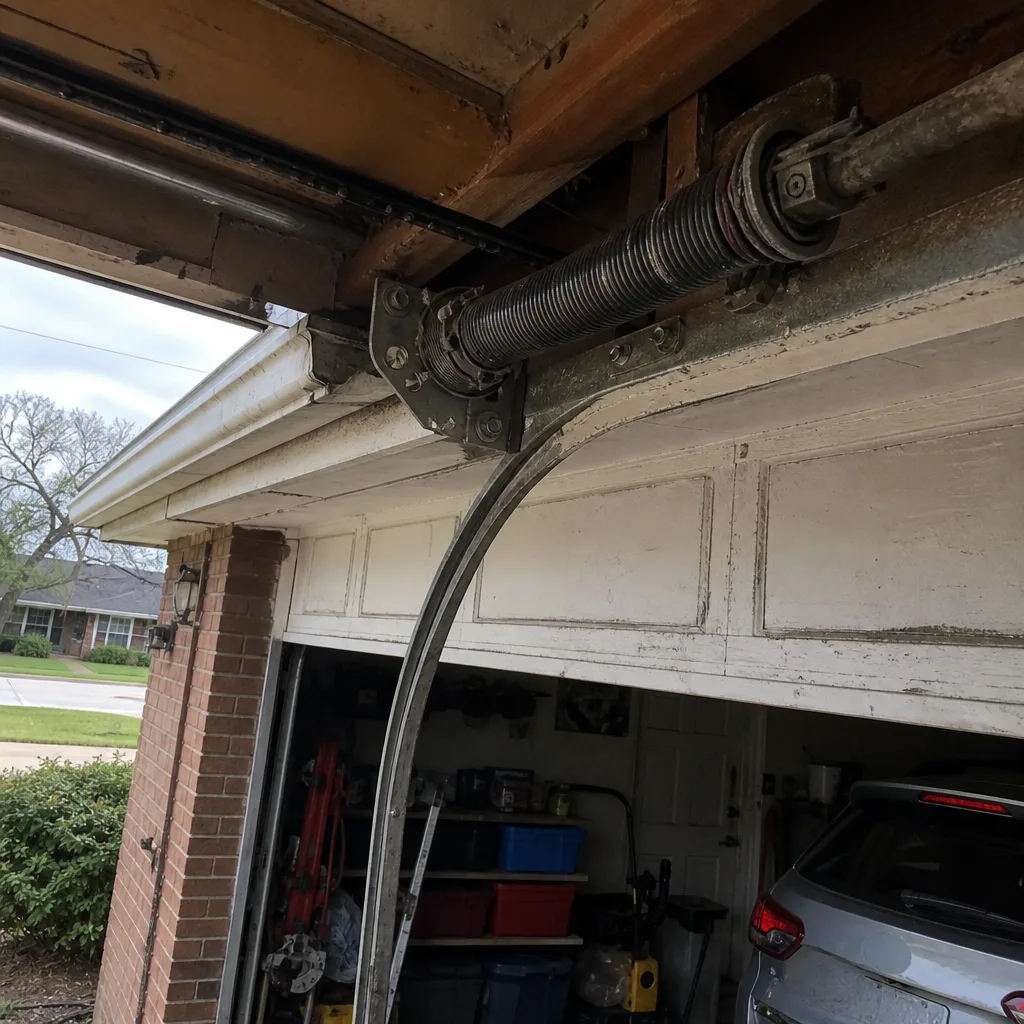 Before
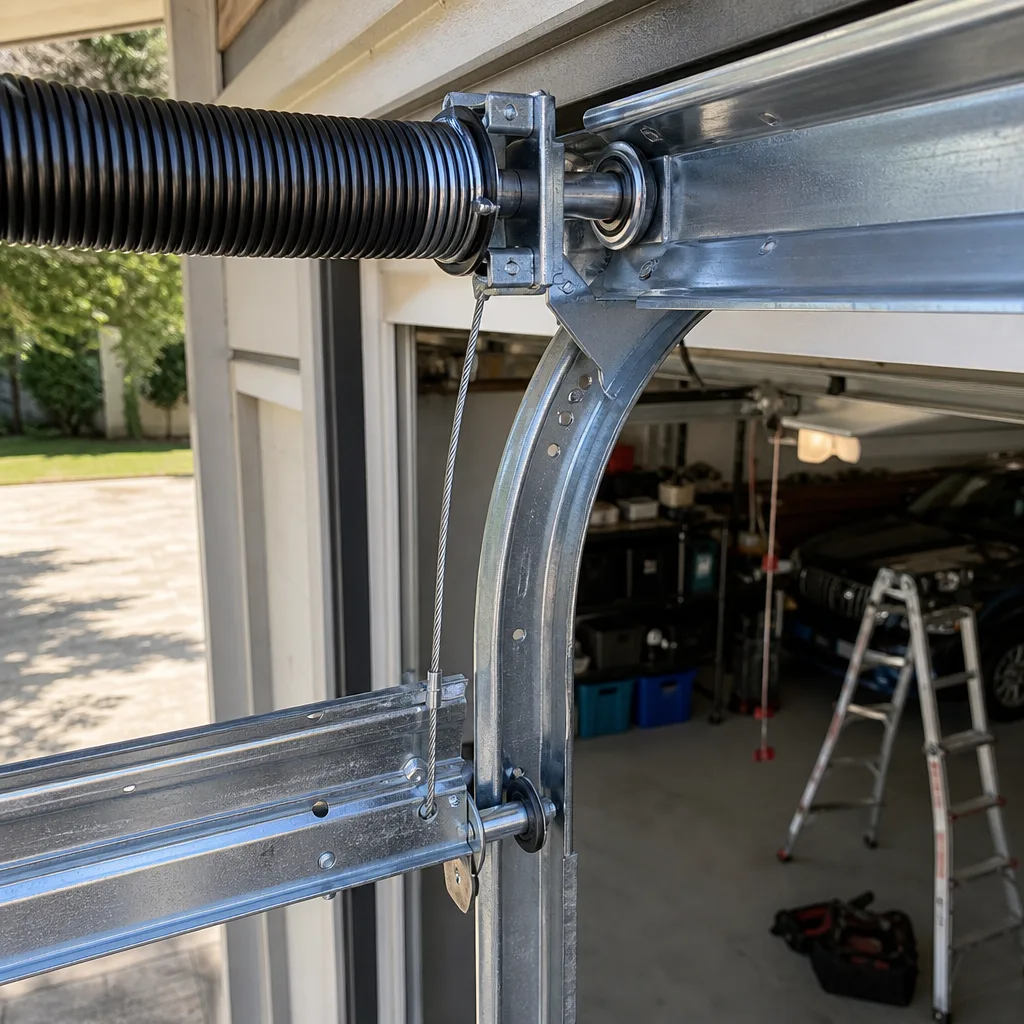 After
After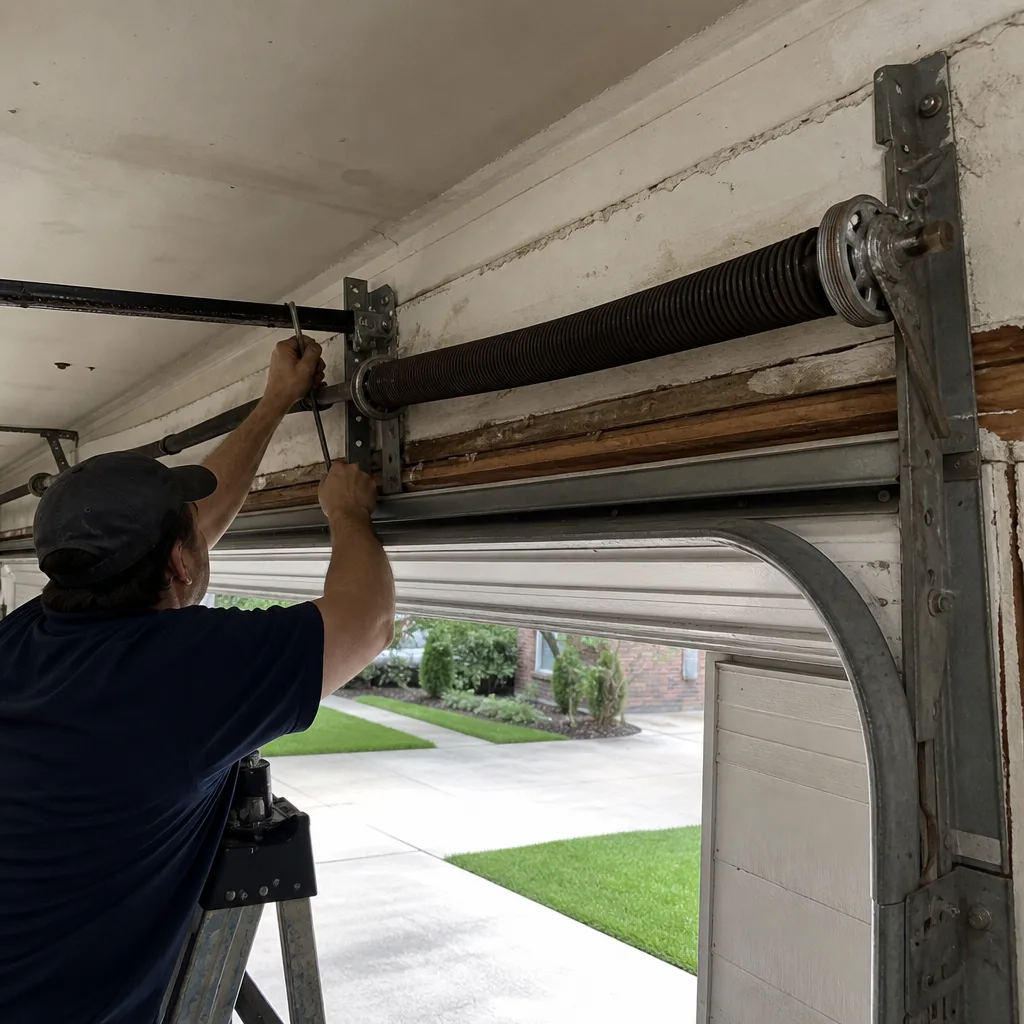 Before
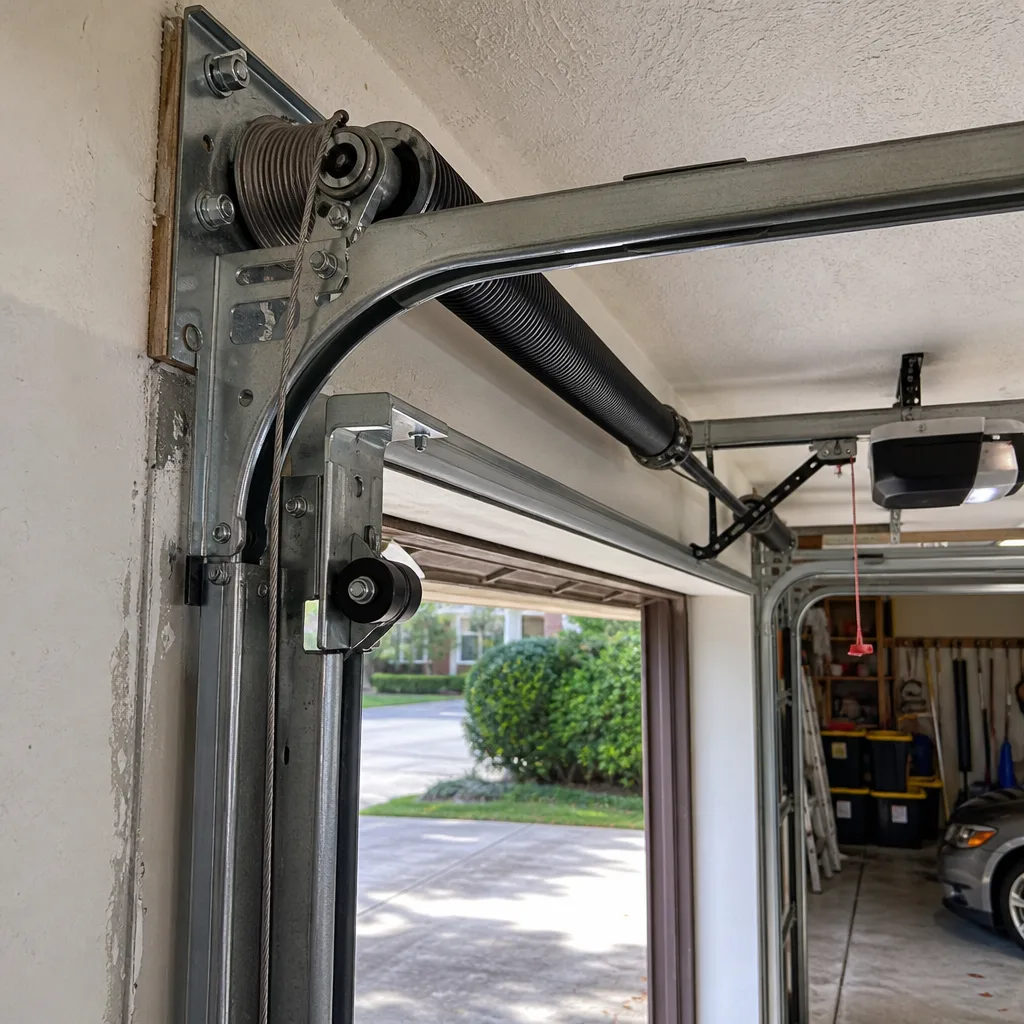 After
AfterDIY vs Professional Garage Door: The Bellaire Homeowner’s Decision Guide
A wound torsion spring on a standard sixteen-foot garage door stores roughly the same kinetic energy as a pickup truck dropped from three feet. That energy does not leak out gradually. It releases in a single uncontrolled event, and the tools sold at hardware stores are not designed to manage that release. In Bellaire, where many homes were built during the 1960s and 1970s garage-door boom and still run original hardware, we see the aftermath several times a year. This guide draws a clear line between garage door tasks a careful homeowner can handle and tasks where the failure mode sends someone to the emergency room. You will learn which repairs are genuinely within reach, which ones are not worth the risk, and how to prepare for a professional visit so the job gets done right in a single trip.
Quick Answer
Most Bellaire homeowners can safely handle weatherstripping replacement, sensor realignment, track cleaning, and cosmetic panel touch-ups. Any work involving torsion springs, cable drums, or high-tension hardware should be left to a trained technician with proper winding bars and safety equipment. The dividing line is not skill level. It is whether a mistake creates an injury you cannot recover from before you know it happened.
Table of Contents
- How Torsion Springs Actually Work (And Why They Demand Respect)
- Garage Door Tasks Safe for a Careful DIYer
- What You Should Never Attempt Yourself
- The Task-by-Task Risk Matrix
- The Real Cost of DIY vs. Professional Repair in Bellaire
- The Misdiagnosis Tax: When DIY Fixes the Symptom, Not the Cause
- What to Do Before the Professional Arrives
- When to Call a Professional
How Torsion Springs Actually Work (And Why They Demand Respect)
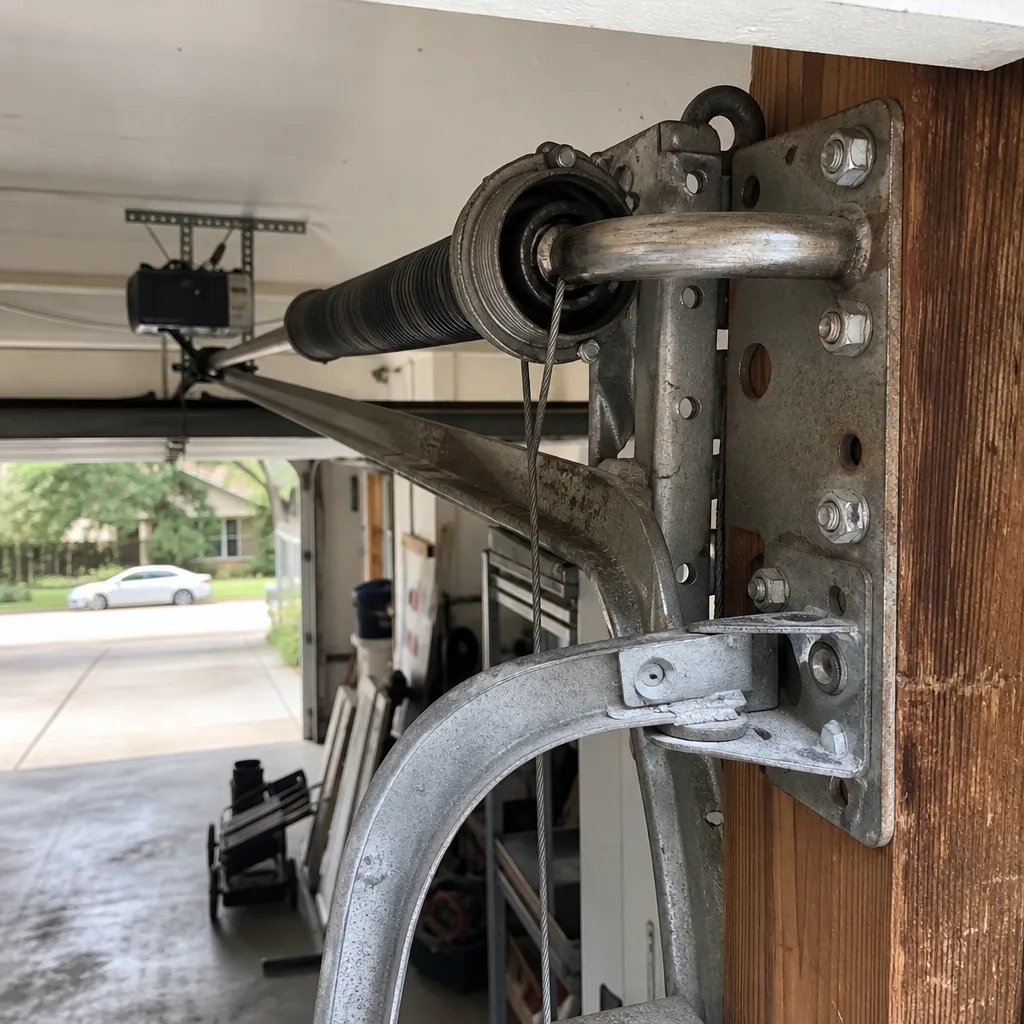
A garage door weighs between 150 and 400 pounds depending on size and material. The torsion spring, mounted horizontally above the door on a steel shaft, is what makes that weight feel light when you lift it manually. The spring is wound tight, storing mechanical energy that counterbalances the door’s mass. When the opener runs or you lift by hand, the spring unwinds slightly, releasing energy to assist the lift. When the door closes, the spring rewinds, storing energy again.
The critical detail is this: the spring is always under tension, even when the door is fully open. A standard two-car garage door in Bellaire, say a sixteen-by-seven Clopay or Wayne Dalton installed in the 1990s, typically runs a pair of torsion springs rated for 10,000 cycles. Each cycle is one open and one close. At four cycles per day, that spring set is engineered for roughly seven years. Many we encounter in Bellaire’s older neighborhoods have far exceeded that.
When a spring breaks, it sounds like a gunshot. The door slams down or hangs crooked, dead weight on the cables. The homeowner’s instinct is to replace the spring. Here is what goes wrong.
Winding a new torsion spring requires inserting solid steel bars into the cogs of the winding cone and adding precise quarter-turns of tension, typically thirty to forty for a standard door. The bars must be the correct diameter, rated for the load, and inserted fully. If a bar slips or the cone fractures, the stored energy releases instantly. The bar becomes a projectile. The cone can shatter. We have seen broken wrists, facial fractures, and worse. The danger is not that the homeowner is careless. It is that the failure mode offers no warning and no time to react.
Extension springs, the older type that run parallel to the horizontal tracks, carry similar risks though the mechanism differs. A broken extension spring can whip through the garage. That is why modern installations include safety cables threaded through the spring coils. Many Bellaire homes still lack these.
We do not describe this to frighten anyone. We describe it because the physics are specific, the injuries are documented, and the protective equipment required (safety glasses, proper winding bars, ladder rated for the technician’s weight plus tool load) is not found in a typical homeowner’s collection. The spring is named for the mainspring in a clock, the component that drives every other function. Our company is named for it because it is the heart of the system, and because respecting it is the foundation of doing this work safely.
Garage Door Tasks Safe for a Careful DIYer
Not every garage door problem requires a technician. Several maintenance and minor repair tasks carry manageable risk and can extend the life of your system significantly. These are the ones we encourage Bellaire homeowners to handle themselves.
1. Weatherstripping Replacement
The rubber seal along the bottom of the door and the vinyl or brush seals on the sides and top deteriorate in Houston’s heat and humidity. Cracked bottom seals let water into the garage during Bellaire’s heavy spring rains and allow conditioned air to escape year-round. Replacement is straightforward: pull the old seal from the retainer channel, measure and cut the new one, and slide it in. No tensioned components are involved. Buy the correct profile for your door brand, whether it is a Wayne Dalton T-channel or a standard Clopay bulb seal.
2. Lubrication of Moving Parts
A silicone-based garage door lubricant applied to the rollers, hinges, and bearing plates every six months reduces noise and wear. Do not use WD-40, which attracts dirt and gums up in humidity. Apply sparingly, wipe excess, and run the door up and down to distribute. This takes ten minutes and can prevent a service call.
3. Safety Sensor Realignment
Photo-eye sensors near the floor on each side of the door must face each other squarely. If the door reverses for no apparent reason or the opener light flashes, check that both LEDs are solid, not flickering. Clean the lenses with a soft cloth, loosen the wing nuts, adjust until both lights hold steady, and retighten. This resolves perhaps a third of the “opener not working” calls we receive in Bellaire.
4. Track Cleaning and Minor Alignment
Debris in the vertical tracks can cause the door to bind. With the door closed and the opener unplugged, wipe the tracks with a damp cloth and check for dents. Minor bends can be tapped straight with a rubber mallet. Do not attempt to adjust the horizontal track mounting brackets, which affect spring tension balance.
5. Cosmetic Panel Touch-Up
Steel door panels with surface rust can be sanded, primed with rust-inhibiting primer, and painted to match. This is purely cosmetic but protects against Houston’s salt-air humidity, particularly for homes near the Bellaire Triangle or other areas with older Craftsman-style installations.
6. Opener Remote and Keypad Programming
Adding or erasing remote codes, resetting the keypad PIN, or reconnecting after a power outage is covered in your opener manual. Most LiftMaster, Chamberlain, and Genie units use a simple learn-button sequence. Keep the manual or download it from the manufacturer’s site.
These tasks share a common trait: if something goes wrong, the consequence is inconvenience, not injury. That is the standard we apply when advising homeowners.
What You Should Never Attempt Yourself
Some garage door work falls into a different category entirely. The risk is not that you might damage the door. It is that you might not survive the mistake.
Torsion Spring Replacement or Adjustment
We covered the physics above. The summary is simple: this is not a tutorial we will provide, and it is not a task we believe any homeowner should attempt. The tools are specialized, the technique requires hands-on training, and the error margin is zero.
Cable Drum or Cable Replacement
The lift cables that run from the bottom brackets to the cable drums at each end of the torsion shaft are under the same tension as the spring. A cable that unspools unexpectedly can lash with lethal force. The drums themselves must be wound in precise synchronization; uneven winding puts destructive strain on the door panels and the opener.
Bottom Bracket Removal
The brackets at the bottom corners of the door attach the lift cables. These brackets are under constant tension from the spring system. Removing a bottom bracket without first releasing spring tension properly causes immediate, uncontrolled cable release. We have seen doors collapse and brackets become projectiles.
Spring Conversion (Extension to Torsion)
Some older Bellaire homes still run extension spring systems. Converting to torsion springs is a full system redesign requiring new hardware, precise weight calculations, and professional installation. The geometry of the header, the available headroom, and the door weight must all be measured and matched. An incorrect spring rate causes premature failure or dangerous over-tensioning.
Opener Mounting and Rail Assembly on High-Lift or Vertical-Lift Doors
Standard opener installation on a sectional door is within reach of a skilled homeowner with proper tools. High-lift or vertical-lift configurations, sometimes found in Bellaire’s custom homes with taller ceilings, require precise rail angle calculations and reinforcement. Errors here can cause the opener to tear away from the header or the door to free-fall.
Panel Replacement on Sectional Doors
While a single panel swap sounds simple, the door must be fully supported during the work, the hinges must be reattached with correct torque, and the spring tension must be verified afterward for balance. An unbalanced door strains the opener and can reverse unexpectedly.
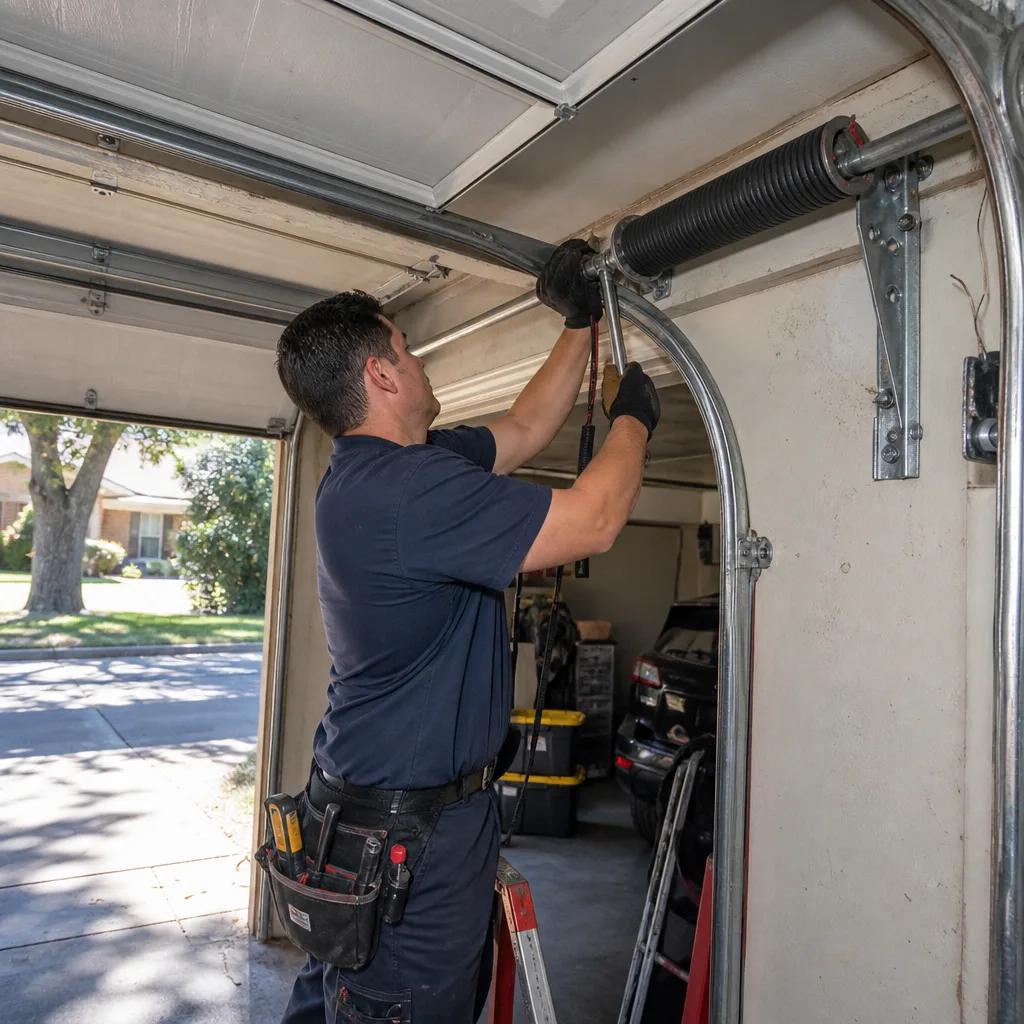
Our garage door repair in Bellaire technicians carry the specific tools for each of these tasks and arrive with the parts already on the truck. Most jobs are completed in a single visit, which matters when your car is trapped inside or your home is unsecured.
The Task-by-Task Risk Matrix
Here is the practical reference we wish every Bellaire homeowner had on hand. The left column lists common garage door tasks. The center column rates the injury potential if something goes wrong. The right column gives our recommendation.
| Task | Injury Potential | Recommendation |
|---|---|---|
| Weatherstripping replacement | Negligible | DIY appropriate |
| Lubrication of rollers, hinges, bearings | Negligible | DIY appropriate |
| Safety sensor cleaning and realignment | Negligible | DIY appropriate |
| Remote/keypad programming | None | DIY appropriate |
| Track cleaning and minor dent removal | Low | DIY with door closed and opener unplugged |
| Cosmetic panel rust repair | Low | DIY appropriate |
| Opener installation on standard sectional door | Moderate | Experienced DIYer only; professional recommended |
| Bottom bracket inspection (visual only) | Low if untouched | Visual inspection only; do not remove hardware |
| Spring tension balance test | High | Professional only |
| Cable or cable drum work | Severe | Professional only |
| Torsion spring replacement or winding | Severe or fatal | Professional only |
| Extension spring replacement without safety cables | Severe | Professional only |
| Spring system conversion | Severe | Professional only |
| Full door replacement | Moderate to severe | Professional only |
The pattern is clear. Tasks involving stored mechanical energy belong to trained technicians with proper tools and insurance. Tasks involving routine maintenance and non-tensioned components belong to the homeowner willing to read the manual and work carefully.
The Real Cost of DIY vs. Professional Repair in Bellaire
Homeowners often assume DIY saves money. Sometimes it does. On garage door work, the calculation is more nuanced than the retail price of parts suggests.
What DIY Actually Costs
A torsion spring purchased at a hardware store or online retailer typically runs $40 to $80 for a standard pair. Winding bars, if purchased separately, add $20 to $40. A ladder rated for the job, safety glasses, and proper gloves add more if you do not already own them. The total outlay for a single spring replacement, assuming you already own basic tools, is roughly $80 to $150.
But this assumes correct diagnosis. The spring is not always the only failed component. In Bellaire’s humid climate, we regularly see cable corrosion, drum wear, and bearing plate degradation that a homeowner might miss. Replacing the spring while leaving a frayed cable or worn drum means a second failure within months, and the second failure often damages additional components.
There is also the time cost. A first-time spring replacement, researched and executed carefully, typically consumes four to six hours including travel for parts, tutorial review, and the work itself. A professional technician completes the same job in sixty to ninety minutes because the tools, parts, and technique are already in hand.
What Professional Repair Costs in Bellaire
In the Bellaire market, professional torsion spring replacement typically ranges from $180 to $340 depending on door size, spring type, and whether dual springs or high-cycle upgrades are selected. This includes the springs, labor, balance testing, safety inspection of cables and drums, and a warranty on the work.
Our Mainspring Garage Door Co. home pricing is stated upfront before any work begins. The price you agree to is the price on the invoice. We carry springs for all major brands including Raynor, LiftMaster-compatible doors, and the Wayne Dalton systems common in 1980s and 1990s Bellaire construction, so most jobs finish in a single visit with no waiting on parts.
When DIY Makes Financial Sense
Weatherstripping, lubrication, and sensor work clearly favor DIY. The parts are inexpensive, the risk is negligible, and the time investment is minimal. For these tasks, professional service is available but rarely cost-effective unless bundled with other work.
When Professional Service Pays for Itself
Spring, cable, and drum work favors professional service not because homeowners are incapable but because the risk-adjusted cost favors expertise. A trip to the emergency room, even with insurance, exceeds the professional repair bill. A botched DIY spring job that damages the door or opener turns a $250 repair into a $1,200 replacement. And the warranty on professional work, in our case the 90-Day Done Right Promise, means if anything is not right, we return at no charge.
We also offer a Free Second Opinion on any written estimate. If another company has quoted you a repair in Bellaire, we will review it honestly and tell you whether the scope and price are reasonable. No obligation.
The Misdiagnosis Tax: When DIY Fixes the Symptom, Not the Cause
This is the hidden cost we see most often in Bellaire. A homeowner addresses the obvious problem while the underlying cause continues to degrade the system. Months later, the failure returns worse than before.
Common Misdiagnosis Patterns
Symptom: Door will not stay open or feels heavy.
DIY fix: Adjust opener force settings.
Missed cause: Weakening torsion spring. The opener is compensating for lost spring assist. Cranking the opener force masks the problem until the opener gears strip or the rail bends. The repair then requires both spring replacement and opener rebuild.
Symptom: Door opens crooked or binds on one side.
DIY fix: Lubricate or adjust track.
Missed cause: Uneven cable tension or worn cable drum. The track is not the problem. Adjusting it delays the real repair and can damage the door panels as they torque against misaligned hardware.
Symptom: Opener runs but door does not move.
DIY fix: Replace opener gear assembly.
Missed cause: Broken torsion spring or disconnected cable. The opener was never the problem. The gear replacement was unnecessary, and the door remains inoperable until the spring or cable is addressed.
Symptom: Loud grinding noise during operation.
DIY fix: Lubricate everything.
Missed cause: Worn bearing plates or failing rollers. Lubrication quiets the noise temporarily but does not stop the metal-on-metal wear. The plates or rollers fail completely, often jamming the door mid-cycle.
The Bellaire Factor
Bellaire’s soil conditions and climate add specific wrinkles. Our gumbo clay soil shifts seasonally, and garage door frames settle unevenly over decades. A door that worked fine for twenty years may suddenly bind because the frame has twisted slightly. The fix is not lubrication or force adjustment. It is precise track realignment, sometimes with jamb shimming, to account for the settled opening. This requires measurement and experience that a homeowner cannot reasonably be expected to have.
Similarly, the humidity and occasional flooding in low-lying Bellaire neighborhoods accelerate cable corrosion and bottom bracket rust. A spring replacement without cable inspection leaves corroded cables in service. They fail under load, often at the worst possible moment.
Our technicians are trained to inspect the full system, not just the failed component. The 90-Day Done Right Promise exists because we stand behind that thoroughness. If we replace a spring, we check the cables, drums, bearings, and opener force settings before we leave. It is part of the flat price, not an upsell.
What to Do Before the Professional Arrives
There are legitimate steps a homeowner can take that reduce service time, improve diagnostic accuracy, and occasionally lower the bill. These are not DIY repairs. They are preparation that helps the technician help you faster.
- Clear the area. Move vehicles, bicycles, and storage items away from the door and the workspace around the opener. Technicians need safe ladder placement and room to lay out tools. In Bellaire’s compact older garages, this step alone can save fifteen minutes of billable time.
- Document the problem with video. Use your phone to record the door’s behavior: the noise it makes, where it stops, whether it reverses, and any flashing lights on the opener. Show the video to the technician on arrival. Precise symptoms lead to faster diagnosis and fewer test cycles.
- Measure the door. Note the width and height (e.g., 16′ x 7′), the material (steel, wood, aluminum, fiberglass), and if visible, any brand markings. This is on the inside edge of the door or on a sticker near the top section. For Raynor, Wayne Dalton, and Craftsman doors common in Bellaire, the model number helps us confirm spring specifications before we arrive.
- Check the opener. Note the manufacturer (LiftMaster, Chamberlain, Genie, Craftsman) and model number, usually on a sticker near the light lens or on the motor housing. Opener age matters: units over fifteen years often need replacement rather than repair, and knowing the model in advance lets us bring the right replacement if needed.
- Describe recent changes. Have you had foundation work, roof replacement, or significant landscaping that might have affected the garage structure? Soil work in particular can shift door frames in Bellaire’s clay soils. This context helps the technician distinguish between component failure and structural movement.
- Secure pets and children. The work area must remain clear during service. Spring and cable work requires focused attention without distraction or interruption.
- Have your previous service records ready. If another company has worked on the door, knowing what was replaced and when prevents redundant work and helps warranty claims.
These steps do not replace professional expertise. They make that expertise more efficient. A technician who arrives with the right parts, clear symptoms, and accurate door specifications can complete most garage door installation in Bellaire or repair jobs in a single visit. That is our standard at Mainspring, and your preparation helps us meet it.
Common Mistakes to Avoid
- Using vice grips or pliers as winding bar substitutes. We have seen the aftermath. Only solid steel winding bars of the correct diameter belong in a torsion cone. Anything else is a gamble with catastrophic odds.
- Ignoring a single broken spring on a dual-spring door. Many sixteen-foot doors use two springs. When one breaks, the door may still operate, unevenly and with dangerous strain on the opener and remaining spring. Operating in this condition guarantees secondary damage.
- Applying WD-40 to garage door components. It is a solvent, not a lubricant. It strips existing grease, attracts dust, and turns to gum in Houston humidity. Use silicone spray or white lithium grease specified for garage doors.
- Disconnecting the opener without supporting the door. Pulling the emergency release handle on an unbalanced door causes immediate free-fall. Always verify the door is balanced and can be held manually at waist height before disengaging the opener.
- Buying springs by door weight alone without measuring the spring dimensions. Wire gauge, inner diameter, and overall length must all match. An incorrect spring rate causes poor door balance, opener strain, and premature failure. In Bellaire’s older homes with non-standard hardware, off-the-shelf springs often do not fit.
- Assuming all garage door technicians are equally qualified. Texas does not require a specific license for garage door repair. Ask about training, insurance, and warranty terms before hiring. A flat price stated upfront, a written guarantee, and background-checked technicians are minimum standards, not extras.
When to Call a Professional
Call a professional when the task involves tensioned components, when the diagnosis is uncertain, when the door is a primary security point for your home, or when your time is worth more than the savings of DIY experimentation. Specific scenarios: a broken spring or cable, a door that has fallen off its tracks, an opener that smokes or smells electrical, repeated reversals after sensor cleaning, or any situation where the door is stuck open and your home is unsecured.
In Bellaire, where many residents have lived in their homes for decades and plan to stay, the value of a repair done right the first time compounds over years of reliable service. Mainspring Garage Door Co. offers free estimates in Bellaire. Carl Dutton and our team arrive with the parts on the truck, state the flat price before any work begins, and back every job with our 90-Day Done Right Promise in writing. Call (832) 937-9424 for a free estimate.
Frequently Asked Questions
Professional torsion spring replacement in Bellaire typically runs $180 to $340 for a standard residential door, including parts, labor, and system balance verification. The exact price depends on door size, whether single or dual springs are used, and whether high-cycle springs are selected for longer life. We state the flat price upfront before any work begins, and our $50 Off Any Repair Over $250 offer applies to qualifying jobs. Call (832) 937-9424 for an exact quote - estimates are free.
You can, but you should not. Springs on the same door age at the same rate. When one breaks, the other is near failure. Replacing one and leaving the old spring guarantees a second service call within months, often with additional damage from the uneven tension. We replace spring sets in pairs so the door is properly balanced and you are not paying twice.
Not with Mainspring. The price we quote after diagnosis is the price on the invoice. If additional problems are found during work, we discuss them with you before proceeding. No surprises on the bill is a core principle of how we operate in Bellaire.
Most spring replacements are completed in sixty to ninety minutes. Because our technicians arrive with springs for all major brands including Wayne Dalton, Raynor, and LiftMaster-compatible systems, there is no waiting on parts. The door is tested for balance, safety sensors are verified, and the work is backed by our 90-Day Done Right Promise.
Yes. We stock springs, cables, rollers, and hardware for Craftsman, Raynor, Wayne Dalton, and all other major brands. Many Bellaire homes built in the 1970s through 1990s run these systems, and we regularly service them without special-order delays.
The tune-up includes full spring tension and door balance testing, safety sensor alignment and function check, roller and hinge inspection, track cleaning and alignment verification, opener force and limit setting review, and lubrication of all moving parts. It is preventive maintenance that catches problems before they become emergencies, particularly valuable before Bellaire’s storm season.
The Bottom Line
The DIY versus professional question for garage doors is not a test of your competence as a homeowner. It is a clear-eyed assessment of which tasks carry recoverable failure modes and which ones do not. Weatherstripping, lubrication, sensor alignment, and cosmetic work belong to the careful DIYer. Torsion springs, cables, drums, and structural alignment belong to trained technicians with proper tools and the experience to spot what is failing next. In Bellaire’s established neighborhoods, where garage doors have served for twenty, thirty, or forty years, the right repair done once is worth more than the cheapest repair done twice. We have been serving this community since 1984, and we will be here when you need us.
Written by Carl Dutton, Owner at Mainspring Garage Door Co., serving Bellaire since 2016.