
Last updated September 10, 2026
Full 25-point door and opener safety check with every visit - springs, cables, rollers, tracks, and your LiftMaster or Chamberlain opener included
You get a price before we start. It does not change when the truck arrives.
 Before
 After
After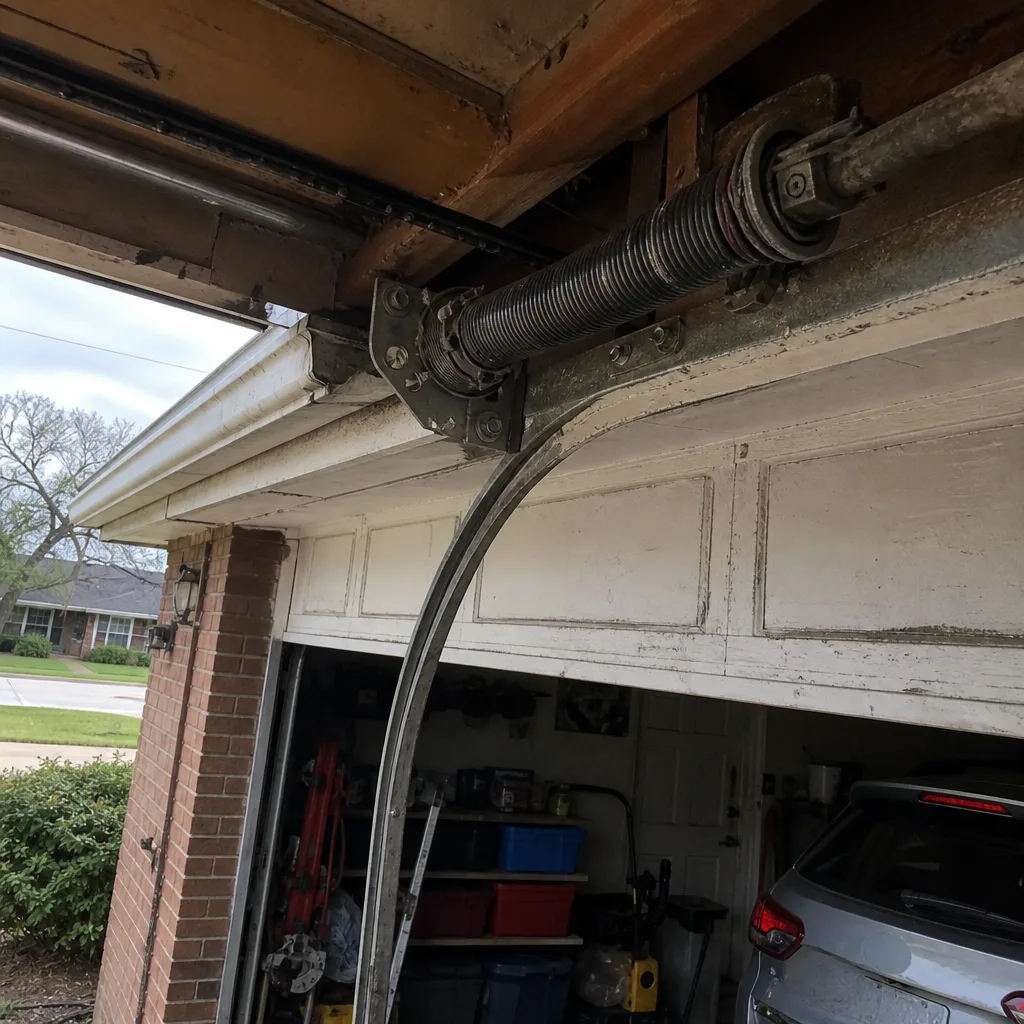 Before
 After
After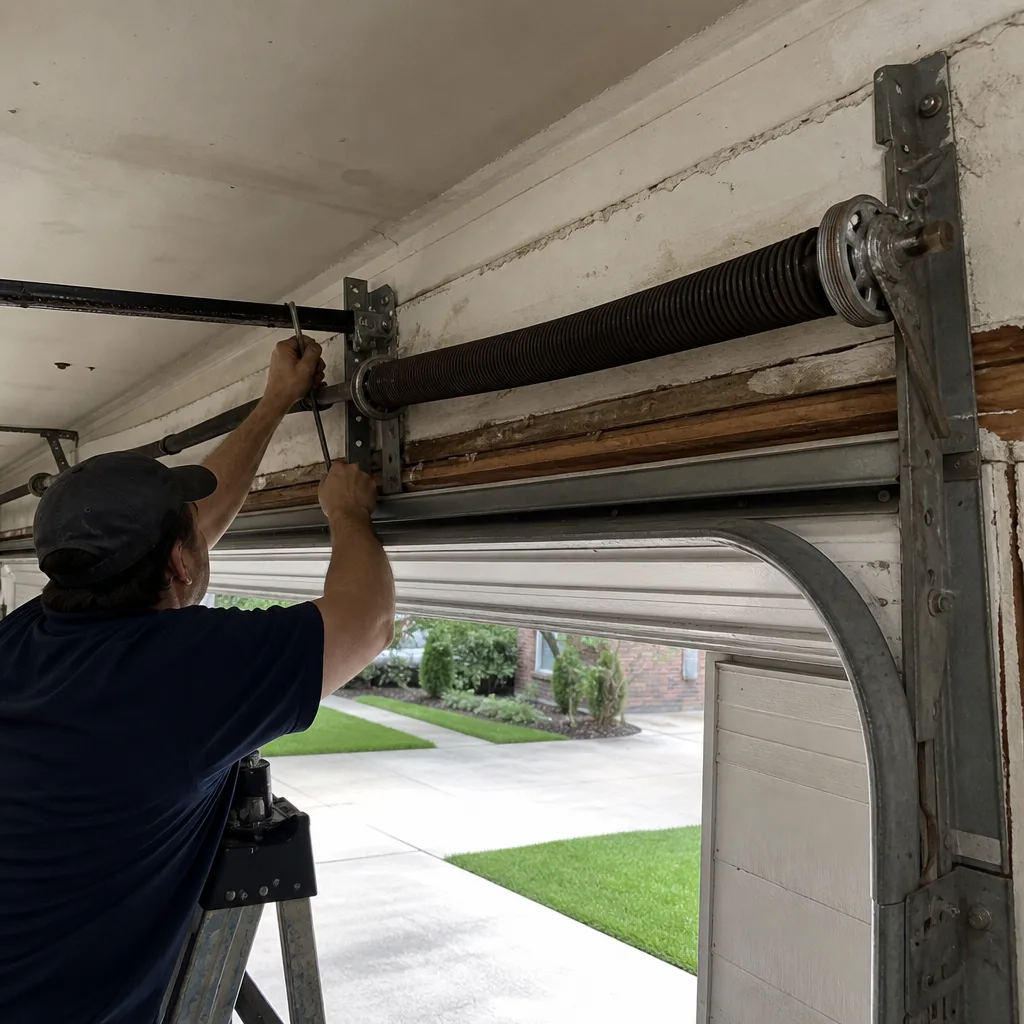 Before
 After
AfterGarage Door Repair Maintenance Checklist for Bellaire Homeowners
The number-one repair call Bellaire technicians handle in September isn’t springs or openers. It’s corroded bottom seal brackets that went unnoticed all summer while the door cycled in near-100% humidity. Most maintenance checklists are borrowed from northern-climate trade manuals, so they miss the failure points that actually shorten garage door life here. This guide is built backwards, starting from the repairs we see most often in Bellaire, then tracing each one to the maintenance step that would have prevented it. You’ll get a humidity-specific schedule, a two-minute monthly visual you can keep on a card in the garage, and the exact Garage Door Warning Signs: A Bellaire Homeowner’s Reference Guide to help you know it’s time to call before a small fix becomes a big one.
Quick Answer
Bellaire homeowners should inspect their garage door monthly for track alignment, roller wear, and seal condition; lubricate moving parts quarterly with a silicone-based product rated for high humidity; and schedule a professional tune-up annually before August heat peaks. The full checklist below covers 14 points organized by frequency, with specific steps adapted to our Gulf Coast climate cycle.
Table of Contents
- Why Bellaire’s Climate Changes the Maintenance Rules
- The Two-Minute Monthly Visual Inspection
- Quarterly Lubrication and Hardware Check
- The August Bottom Seal Inspection Window
- Testing Spring Tension Without Releasing It
- Threshold and Floor Seal: Drainage and Structure
- Annual Professional Tune-Up: What to Expect
- Brand-Specific Maintenance Notes
Why Bellaire’s Climate Changes the Maintenance Rules
Standard garage door maintenance was written for climates where the enemy is cold and salt. In Bellaire, the enemy is moisture that never fully dries. From May through October, relative humidity sits above 75% most days. That changes which parts fail first, which lubricants work, and when you need to look at what.
We’ve been serving garage door repair in Bellaire since 2016, and the pattern is consistent. Spring failures spike in February, when metal contracts after months of thermal cycling. Opener logic board failures cluster in July and August, when garage temperatures exceed 110 degrees and capacitors degrade. But the most expensive preventable damage, corroded bottom hardware and delaminated door sections, shows up in September after a full summer of moisture wicking upward from the slab.
Three climate factors specific to Bellaire reshape the standard checklist:
- Capillary moisture from the slab. Bellaire’s clay-heavy soils hold water for days after rain. Without proper sealing, that moisture climbs the door’s bottom rail through the end caps, rusting brackets from the inside out.
- Salt air intrusion. We’re far enough inland that coastal corrosion is moderate, not severe. But homes near the 610 Loop or with south-facing garage doors still see accelerated pitting on torsion springs and cable drums compared to Houston’s northern suburbs.
- UV intensity on south and west exposures. Bellaire’s mature tree canopy helps, but doors on unshaded exposures see vinyl weatherstripping harden and crack in 18 to 24 months, not the 3 to 4 years typical in cooler climates.
This checklist addresses each factor with the right product, the right timing, and the right inspection focus.
The Two-Minute Monthly Visual Inspection
This inspection covers roughly 80% of the failure modes we address in Bellaire service calls. Do it on the first Saturday of each month. Keep a laminated card in the garage with these fourteen points, and you’ll catch most problems while they’re still small.
Before you start: Close the door and disconnect the opener by pulling the red release cord. Manually lift the door to waist height. It should stay put without drifting up or down. If it drifts, note the direction. That’s your first diagnostic.
- Track alignment. Stand inside the garage, facing the door. The vertical tracks should be perfectly plumb. Look for gaps between the track and the door frame, or bends in the track itself. In Bellaire, foundation settling from clay soil expansion is common, especially in homes built before 1990. A track that was true in January may be out of plumb by August.
- Roller condition. Nylon rollers should spin freely and show no flat spots or cracks. Steel rollers should turn without grinding. In high humidity, grit sticks to lubricant residue and grinds rollers flat. If you see a dark streak on the track below a roller, that roller is failing.
- Hinge pin wear. Wiggle each hinge. There should be no vertical play. Hinge pins corrode from the bottom up in Bellaire garages where morning condensation collects.
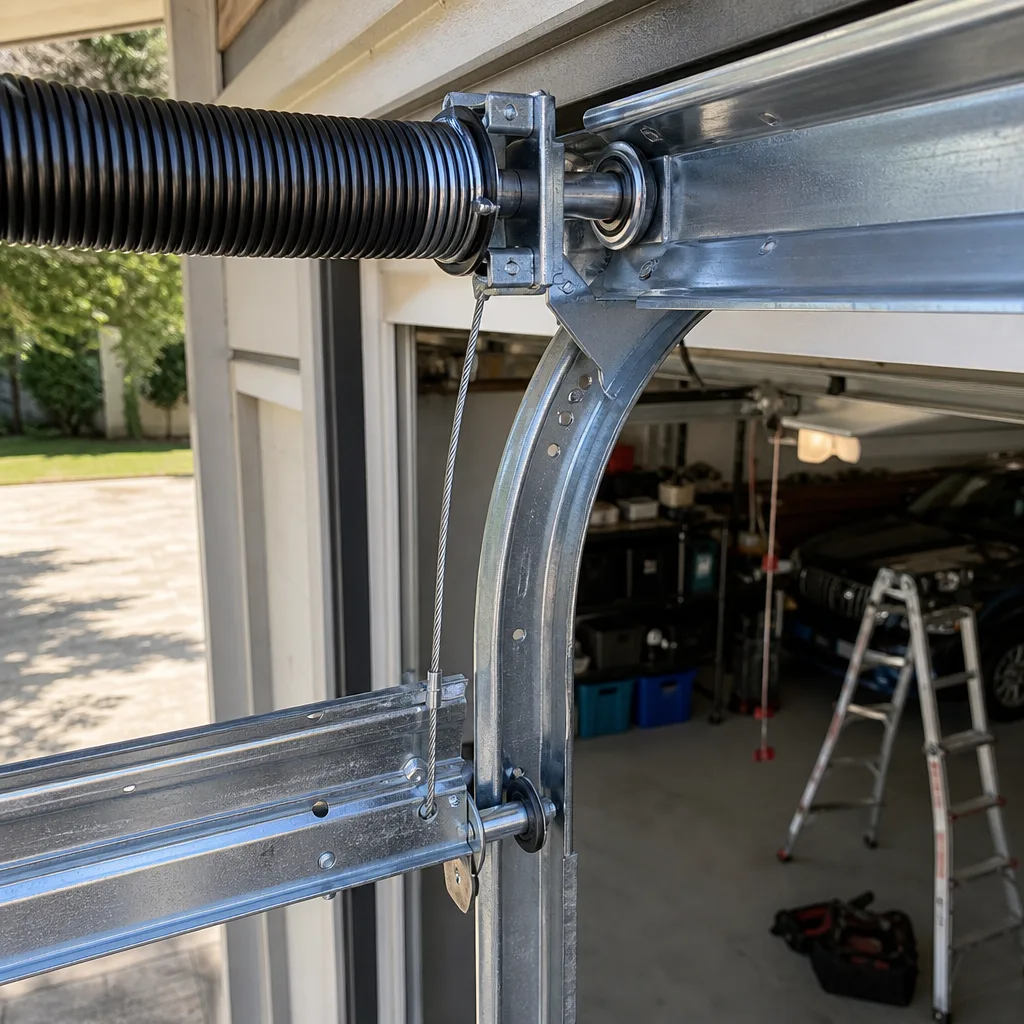
- Cable fraying. Inspect the lift cables where they wrap around the bottom drums. Look for broken strands, rust blooming, or cable flattening. Any fraying means replacement, not repair. Cables are under extreme tension and require a trained technician to handle safely.
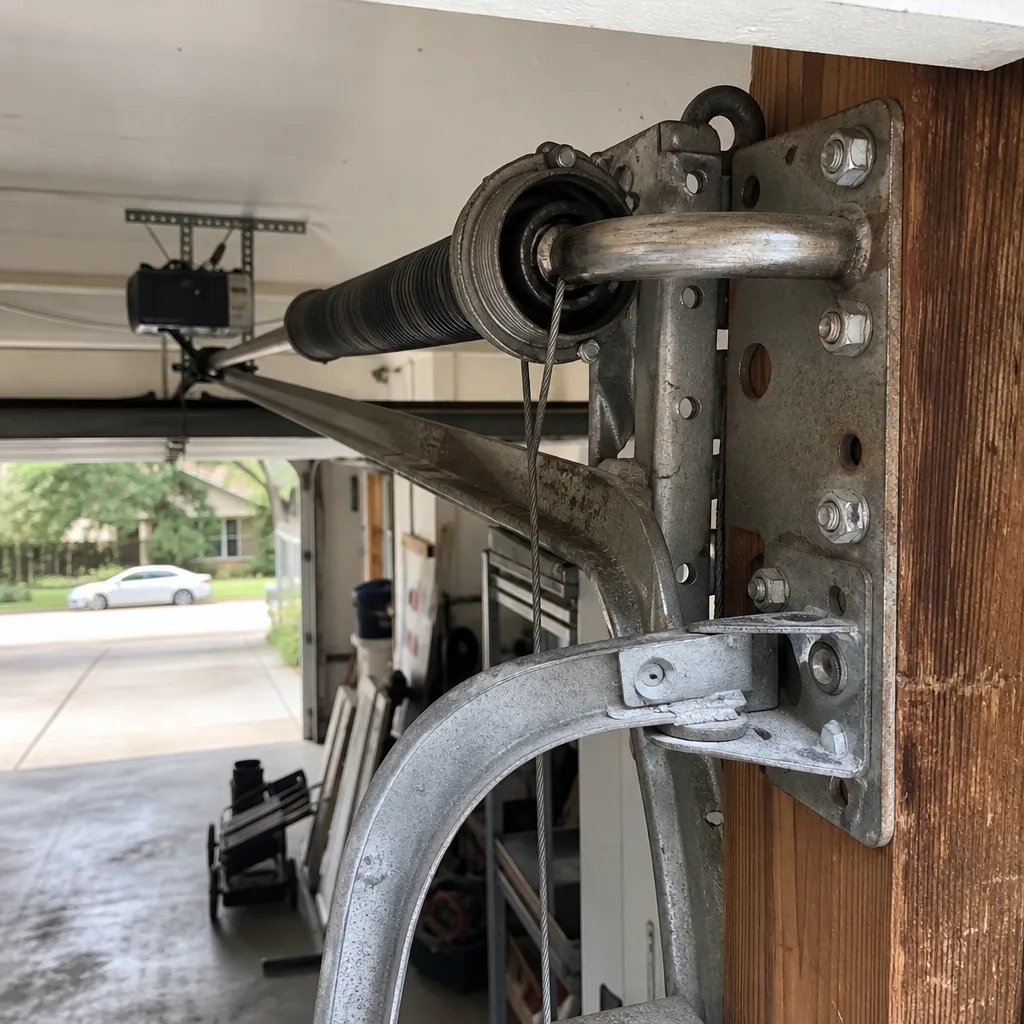
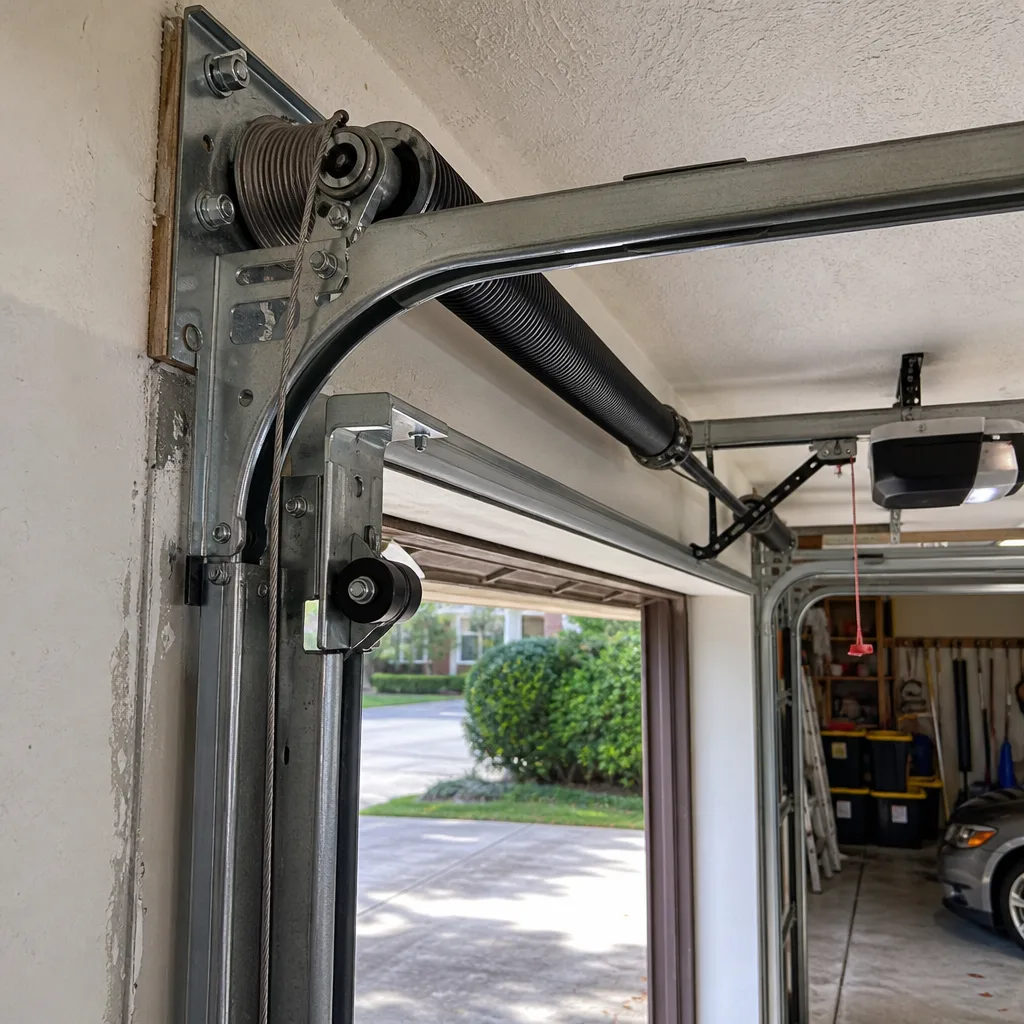
- Spring coil gaps. Look at the torsion spring above the door. The coils should be evenly spaced when the door is closed. A visible gap or separation in one section means the spring has lost tension and is working the opener harder. In our experience, springs in Bellaire fail at 8 to 12 years of normal use, but we’ve seen 5-year failures on doors that cycle heavily during summer months when kids are home.
- Bottom seal contact. With the door closed, the rubber seal should compress evenly across the full width. No daylight should show underneath. In Bellaire, check the corners especially. Water tends to pool at the slab edges near downspouts.
- End cap corrosion. The metal end caps on the bottom rail are where moisture does its worst work. Look for rust streaks, swelling, or separation between the cap and the rail. This is the September failure we mentioned. Catch it in June and you clean and reseal. Catch it in October and you’re replacing the bottom section.
- Panel delamination. Steel doors with vinyl backing can trap moisture at the bottom. Press gently on the lowest panel. Soft spots or bubbling paint mean water has gotten between layers.
- Opener rail deflection. The opener’s horizontal rail should be straight. Sagging means the door is overweight for the opener, usually from spring fatigue or added insulation.
- Safety sensor alignment. The LED lights on both sensors should glow steady, not flicker. Wipe the lenses with a dry cloth. Humidity film builds faster here than in drier climates.
- Wall button and remote response. The door should start moving within one second of command. Delayed response often precedes logic board failure, especially in unconditioned garages during peak summer.
- Auto-reverse test. Place a 2×4 flat on the floor centerline. The door should reverse on contact. If it doesn’t, the force setting needs adjustment. Do not attempt to adjust force settings yourself. The adjustment interacts with spring tension and can create a hazardous condition.
- Manual release function. Pull the red cord and verify you can lift the door smoothly by hand. It should feel like 15 to 25 pounds of effort. Heavy doors strain the opener and indicate spring problems.
- Exterior hardware. Check decorative handles, windows, and exterior locks for looseness. Thermal expansion from Bellaire’s 40-degree seasonal temperature swing works fasteners loose over time.
Total time: two to four minutes. If you find nothing, you’ve bought peace of mind for another month. If you find one or two items, you know what to watch. If you find three or more, it’s time for our Garage Door Repair services.
Quarterly Lubrication and Hardware Check
Lubrication in Bellaire is not about preventing squeaks. It’s about creating a barrier between metal and moisture. The wrong product attracts grit and accelerates wear. The right product, applied correctly, extends component life by years.
What to use: Silicone-based spray lubricant with a dielectric grade rating, or white lithium grease in a spray can for hinge pins. Avoid WD-40 as a lubricant. It is a solvent and degreaser, not a lasting lubricant, and in humid environments it evaporates quickly, leaving metal exposed. Also avoid graphite-based products. They work well in dry climates but form a gritty paste when combined with Bellaire’s airborne moisture and dust.
What not to use: Heavy petroleum greases. They attract and hold grit. We’ve replaced rollers in Bellaire that were packed with thick grease and ground flat in 18 months. The grease did its job for three months, then became abrasive slurry.
Quarterly procedure:
- Close the door and disconnect the opener.
- Wipe all tracks with a clean, dry rag. Remove old lubricant residue and grit. The track itself should never be lubricated. Lubricant on the track causes roller slippage and uneven wear.
- Apply silicone spray to the torsion spring, coating each coil lightly. Work the door up and down by hand to distribute. One light coat is enough. Excess drips onto the door and collects dust.
- Lubricate each hinge pin at its pivot points. Two short bursts per hinge.
- Apply a thin film to the bearing surfaces of the rollers, where the roller meets the stem. Do not lubricate the wheel surface that rides in the track.
- Coat the cable drums and the length of exposed cable lightly. This is where Bellaire’s humidity attacks first.
- Check and tighten all visible fasteners with a socket wrench. Focus on the track brackets, hinge screws, and opener mounting bolts. Do not over-tighten. Snug is sufficient.
- Operate the door manually five full cycles. Listen for grinding, clicking, or binding. Smooth and quiet is the standard.
Timing: March, June, September, December. The September application is critical. It protects hardware through the wettest months and prepares for the thermal contraction of January and February.
For homeowners who prefer to have this done professionally, our Mainspring Garage Door Co. home page lists current service offerings, including the $89 Seasonal Tune-Up that covers full lubrication, hardware torque, and safety system testing.
The August Bottom Seal Inspection Window
Conventional wisdom says check weatherstripping in spring, when you’re doing other seasonal maintenance. In Bellaire, that’s backwards. By spring, the damage from winter moisture is already done. The right time is late July through mid-August, before the peak humidity of September and October.
Here’s why the timing matters. Bellaire’s summer pattern runs: heavy rain in May and June, followed by sustained high humidity with little drying wind in July through September. The bottom seal sits in contact with the slab, where capillary moisture is highest. By August, any seal degradation from the spring rains has been compounded by two months of daily thermal cycling. The rubber is at its most stressed state, but it hasn’t yet failed completely. That’s your inspection window.
What to look for:
- Hardening and cracking. Press your thumbnail into the seal. It should indent and rebound. If it’s rigid or cracks under pressure, it’s lost its compression set and won’t seal against driving rain.
- Compression memory loss. The seal should bulge slightly outward when the door is closed, filling the gap between door and slab. If it sits flat or gaps are visible, water will enter during Bellaire’s frequent heavy downpours.
- Corner lifting. The seal’s ends are where water wicks upward first. Look for separation from the retainer track, especially at the corners where downspout discharge concentrates.
- Retainer track corrosion. The aluminum track that holds the seal corrodes at its ends where dissimilar metals meet. Greenish or white corrosion bloom means the track is thinning and will soon fail to hold seal tension.
Replacement timing: If you find any of the above, replace the seal before September. The part costs $15 to $40 depending on width and profile. Installation takes 20 minutes with a helper. If the retainer track is corroded, replace both track and seal as a unit. A failing track will not hold a new seal properly.
For Clopay and Amarr doors common in Bellaire’s 1980s and 1990s construction, verify the seal profile before ordering. These brands use proprietary retainer shapes that are not cross-compatible. Bring a 6-inch sample to the supplier, or call us with the door model number.
Testing Spring Tension Without Releasing It
Torsion springs carry the full weight of your garage door. A standard 16-foot wide door weighs 150 to 250 pounds. The spring balances that weight so the opener lifts 10 to 15 pounds, not 200. When spring tension drops, the opener overheats, the door drifts, and eventually the spring breaks, often with a loud bang that sounds like a gunshot.
We do not recommend homeowners adjust or release torsion springs. The stored energy is lethal if mishandled. Winding bars can slip, springs can unwind unpredictably, and serious injury or death has occurred from DIY spring work. This section covers observation and testing only. Adjustment and replacement require proper tools, training, and safety procedures.
The waist-height balance test:
- Close the door and disconnect the opener.
- Lift the door by hand to waist height, approximately 3 feet off the ground.
- Release it gently.
What the door tells you:
- Door stays put: Spring tension is correct for the door weight. This is the goal.
- Door drifts upward: Spring tension is slightly high. Not urgent, but the opener is working against excess spring force on the way down. Monitor monthly.
- Door drifts downward: Spring tension is low. The opener is lifting more than its designed load. Schedule professional service within two weeks. Continued operation will damage the opener and risks spring failure.
- Door falls rapidly: Dangerous condition. One or both springs have lost significant tension or a cable has failed. Do not operate. Call for same-day service.
Visual spring inspection: Look at the torsion spring with the door closed. You should see 10 to 20 coils, depending on door weight and spring size. Count the coils. Note any separation, rust blooming, or a visible gap where coils no longer touch. A 1-inch gap in a coiled spring represents significant tension loss.
In Bellaire, we see spring fatigue accelerate when doors are used more frequently in summer. Kids home from school, garage workshops active in cooler morning hours, and pool equipment access all add cycles. A door designed for 10,000 cycles may reach that in 7 years instead of 10.
If your balance test shows drift, or you see coil separation, Garage Door Repair in Bellaire from Mainspring includes spring inspection with every service call. We quote the full replacement price before beginning work, including both springs as a matched pair. Replacing one spring on a two-spring door creates imbalance and premature failure of the remaining original spring.
Threshold and Floor Seal: Drainage and Structure
Bellaire’s flat terrain and clay soils create unique drainage challenges. During tropical storms and the heaviest thunderstorm cells, water can pool at garage thresholds faster than it percolates into the ground. A properly sealed door is your first defense. But the seal is only as good as the drainage around it.
Inspect these four points before each rainy season:
- Slab slope. The garage floor should slope gently toward the door, not away from it. Reverse slope traps water against the door. In older Bellaire homes, particularly in the Braeburn Terrace and Bellaire Oaks areas, we’ve seen slabs settle over decades, creating low spots that hold water for hours after rain.
- Downspout discharge. Verify downspouts extend at least 6 feet from the garage corner. Water dumped at the foundation finds the threshold. In Bellaire’s dense tree canopy, downspouts clog with leaves quarterly, not annually.
- Threshold seal integrity. The vinyl or rubber threshold seal adhered to the slab, separate from the door’s bottom seal, should be fully bonded with no gaps. Lift gently at corners. If it separates easily, re-adhere with polyurethane construction adhesive rated for wet conditions, or replace if cracked.
- Floor drain function. If your garage has a floor drain, verify it flows freely. Pour a gallon of water and confirm it disappears within 60 seconds. Slow drains back up during heavy rain, submerging the threshold and forcing water past any minor seal gap.
Structural warning signs: Water entry at the threshold can damage more than stored items. Repeated wet-dry cycling causes the bottom door section to delaminate, the jamb framing to rot, and in block construction, the mortar to deteriorate. We’ve replaced doors in Bellaire where the real damage was $3,000 of framing repair, not the $800 door.
If you notice staining on the interior garage wall near the door, or a musty smell that intensifies after rain, water is getting past your seal. The fix may be as simple as a new bottom seal and threshold. It may require re-grading or drainage work. Either way, addressing it early prevents structural damage that no garage door can fix.
Annual Professional Tune-Up: What to Expect
Even diligent homeowners miss what trained eyes catch. An annual professional tune-up, timed before the August stress peak, covers the full mechanical and safety system with tools and knowledge beyond typical homeowner capability.
What a proper tune-up includes:
- Spring tension measurement with a calibrated winding bar and scale, not estimation
- Cable inspection including drum wear patterns and sheave alignment
- Track plumb and parallel verification with a laser level
- Roller replacement recommendation based on measured bearing play, not visual guess
- Opener force and limit setting verification with a force gauge
- Safety system testing including photo-eye response time and auto-reverse sensitivity
- Full lubrication with products specified for high-humidity environments
- Hardware torque to factory specification with a calibrated torque wrench
- Written condition report with photographed findings and prioritized recommendations
Timing: Schedule in June or July. This places the tune-up before peak thermal and humidity stress, and before the September service rush when shops are backlogged with failures that could have been prevented.
What to ask: Whether the technician arrives with common repair parts on the truck. A tune-up that identifies a worn cable but requires a return visit for installation wastes your time. At Mainspring, our trucks carry springs, cables, rollers, and openers from all major brands. Most jobs we diagnose are completed in the same visit, with the price stated before work begins.
The $89 Seasonal Tune-Up is a standing offer, not a limited promotion. It includes everything above and the 90-Day Done Right Promise in writing. If anything we tune is not right, we return at no charge. No paperwork to file, no dispute process.
Brand-Specific Maintenance Notes
Different manufacturers design their hardware with different tolerances and wear patterns. Knowing your door’s brand helps you focus inspection where it matters.
Clopay: Common in Bellaire’s 1990s and 2000s construction. Clopay’s pinch-resistant hinge design uses a plastic bushing that degrades in UV exposure. Inspect hinge pivots annually for plastic cracking or discoloration. Their Intellicore insulated doors are excellent for thermal performance but the vinyl backer can trap moisture if the bottom seal fails. Check the interior bottom rail for rust staining, which indicates water intrusion between steel and insulation.
Amarr: The Stratford and Lincoln collections appear frequently in Bellaire’s traditional ranch homes. Amarr’s end cap design uses a snap-fit plastic piece that is vulnerable to capillary moisture. We’ve replaced dozens of bottom sections where the end cap cracked, water entered, and the steel shell rusted from inside. Press test the bottom corners during your August inspection. Softness means internal corrosion.
Wayne Dalton: Their TorqueMaster spring system conceals the spring inside a tube. This looks cleaner but eliminates visual inspection. The only homeowner test is the balance test described above. If the door drifts, the internal spring is failing. Wayne Dalton doors also use a proprietary bottom seal profile. Generic replacements will not fit. Order by model number or bring a sample.
Craftsman: Sears-branded openers, often relabeled Chamberlain or LiftMaster units, are common in Bellaire homes built 1985 to 2005. The logic boards in these units are particularly heat-sensitive. If your Craftsman opener works erratically in summer afternoons but normally in morning or evening, the board is degrading. This is not a wiring issue. Board replacement or opener upgrade is the solution.
For Garage Door Opener in Bellaire service, including brand-specific diagnostics, our technicians are factory-familiar with all major manufacturers. We carry replacement logic boards, gear kits, and full opener units on the truck.
Common Mistakes to Avoid
- Lubricating the track. The track is a guide, not a bearing surface. Lubricant on the track attracts grit, causes roller slippage, and creates uneven wear patterns. Wipe tracks clean and dry. Lubricate rollers, hinges, and springs only.
- Using the wrong lubricant for humidity. Heavy greases and petroleum-based products become abrasive paste in Bellaire’s climate. Silicone-based products with high dielectric ratings resist moisture without attracting grit.
- Ignoring the August inspection window. Waiting until spring to check weatherstripping means missing the damage window. By March, corroded brackets and delaminated sections are already established. Inspect in August, repair in August or early September.
- Replacing one spring on a two-spring door. Uneven tension accelerates wear on the remaining original spring, damages the opener, and creates dangerous imbalance. Always replace torsion springs as matched pairs.
- DIY spring adjustment. Torsion springs store lethal energy. The tools and techniques required are not intuitive. We’ve seen serious injuries from homeowners using improvised winding bars or screwdrivers. This work belongs to trained professionals with proper equipment.
- Neglecting downspout maintenance. A clogged downspout dumping water at the garage corner overwhelms any threshold seal. Clean gutters and verify discharge points quarterly in Bellaire’s leaf-heavy environment.
- Assuming silence means health. A quiet door is not necessarily a healthy door. Opener strain from weak springs creates no noise until the opener fails. The balance test reveals what ears cannot.
When to Call a Professional
Some conditions require immediate professional attention. Do not operate the door if you observe: a broken cable or visible cable separation; a broken torsion spring or multiple coil gaps; the door falling rapidly during balance testing; opener rail sagging or opener mounting bracket pulling away from the header; or safety system failure during auto-reverse testing.
Schedule service within two weeks for: door drift during balance testing; grinding or clicking that persists after proper lubrication; weatherstripping damage identified during August inspection; or three or more items flagged during monthly visual inspection.
For more guides & resources, visit our blog. Mainspring Garage Door Co. offers free estimates in Bellaire. Call (832) 937-9424 and a live person will answer, including nights, weekends, and holidays. We quote the full price before any work begins, arrive with parts on the truck, and back every job with the 90-Day Done Right Promise in writing.
Frequently Asked Questions
Quarterly, using a silicone-based spray rated for high-moisture environments. March, June, September, and December are the optimal months for Bellaire’s climate cycle. The September application is especially important because it protects hardware through the wettest period. Call (832) 937-9424 if you’d prefer our $89 Seasonal Tune-Up, which includes full professional lubrication.
A silicone-based spray with dielectric grade rating, or white lithium grease in spray form for hinge pins. Avoid WD-40, which evaporates quickly and leaves metal unprotected, and avoid heavy petroleum greases that attract grit and form abrasive paste. In our experience, silicone products maintain their protective film through Bellaire’s longest humid stretches.
September combines peak humidity, accumulated summer moisture damage, and the beginning of thermal contraction as temperatures moderate. Bottom seal brackets corroded all summer finally fail. Springs that lost tension in heat now face the additional stress of metal contraction. The August inspection window exists specifically to catch these failures before they become emergency calls.
No. Torsion springs store lethal energy and require specialized winding bars, calibrated tools, and training to handle safely. Improvised tools can slip, causing serious injury or death. The balance test described in this guide is the safe limit of homeowner spring inspection. If your door drifts during testing, call a professional for adjustment or replacement.
Mainspring’s Seasonal Tune-Up is $89, a standing offer with no expiration date. The service includes full lubrication, hardware torque, safety system testing, spring tension verification, and a written condition report. If we find repair needs, we quote the full price before any additional work begins. Seniors and veterans receive a permanent 5% discount on all services.
No. We state the flat price before any work begins. If our tune-up reveals additional needs, we explain the finding, show you the issue, and quote the repair separately. You approve or decline before we proceed. There are no surprises on the bill. That’s been our practice for 42 years.
The Bottom Line
Bellaire’s heat and humidity rewrite the standard garage door maintenance rules. A two-minute monthly inspection, quarterly lubrication with the right product, an August bottom seal check, and an annual professional tune-up before peak stress will prevent most emergency failures. The key is timing your maintenance to our local climate cycle, not a generic calendar. Start this month with the fourteen-point visual, schedule your tune-up for June or July, and you’ll avoid the September service rush that fills our schedule with preventable repairs.
For a free estimate, a second opinion on any written estimate, or to schedule your $89 Seasonal Tune-Up, call Mainspring Garage Door Co. at (832) 937-9424. A live person answers around the clock. We arrive with parts on the truck, quote the price upfront, and stand behind every job with our 90-Day Done Right Promise in writing.
Written by Carl Dutton, Owner at Mainspring Garage Door Co., serving Bellaire since 2016.